
Canada’s shift to permits listing a specific DLI, level and program may conflict with IRPR subsection 219(2), which lets dependent children obtain study permits without an acceptance letter or named institution. The resulting legal-administrative gap creates uncertainty and compliance risk for students and schools and calls for IRCC guidance or regulatory clarification.
Soheil Hosseini
June 16, 2026
Jurisdiction
Federal
Week
Week 25
Impact
Moderate
Programs Affected
Canada's Study Permit Changes Expose Gap Between Regulations and Administrative Policy
Summary: Canada’s tighter study permit practices—tying permits to a specific DLI, level, and program—may conflict with the legal exemption in IRPR subsection 219(2), which allows some dependent children to obtain a study permit without an acceptance letter or identified institution. The tension raises compliance and enforcement questions for students and schools. Date: 2026-06-16 | Program Affected: Study Permit | Source: News Article | Urgency: Important Canada has moved toward highly individualized study permits that explicitly list the designated learning institution (DLI), level of study, and program-related conditions. Changes that once required only a notification—like switching programs, transferring schools, or shifting study levels—now often trigger a new permit application, with conditions increasingly printed directly on the permit. This administrative shift collides with an important legal carve‑out in the Immigration and Refugee Protection Regulations. Under IRPR subsection 219(2), an unmarried dependent child under 22 who applies for a study permit as an accompanying family member of a foreign national whose work or study permit was approved before entry is exempt from IRPR 219(1). That means no acceptance letter, no specified DLI, and no designated program or study level are required at application. The result is a practical puzzle: when a permit is issued under 219(2) without any underlying acceptance letter or program details, what educational conditions actually bind the holder? On what legal basis can IRCC impose limits about institution, program, or level, and how should schools interpret permits that lack those specifics? This apparent gap underscores the divide between administrative policy and binding law. While policy can guide operations, it cannot override the IRPA/IRPR. As permits become more granular and institution‑specific, the continued existence of 219(2) raises questions about how conditions should be drafted, enforced, and communicated to students and educational institutions. Independent analysis and potential impacts:
- Positive
- For qualifying dependents, 219(2) preserves flexibility to commence or change studies without being locked to a named DLI or program.
- Institutions may gain access to students more quickly where formal admissions sequencing is still in progress.
- Negative
- Legal uncertainty for students and schools about what conditions apply when no DLI/program is listed.
- Compliance risk if administrative instructions attempt to restrict study paths beyond what IRPR authorizes.
- Inconsistent interpretation at institutions and by officers, potentially leading to enrollment barriers or requests for unnecessary documentation.
- Possible need for clarifying guidance or regulatory amendment to align permit conditions with the statutory framework. What to watch:
- Whether IRCC issues program delivery updates clarifying how conditions should be drafted for 219(2) cases.
- Any regulatory amendments or stakeholder guidance addressing institution/program specificity on permits issued under exemptions.
- Institutional admissions practices adapting to permits that lack a named DLI or program. As Canada refines its international student program, aligning administrative practice with regulatory authority will be central to predictability and compliance. Until clearer guidance emerges, stakeholders should closely review permit wording and remain attentive to updates that reconcile individualized conditions with the scope of IRPR 219(2).
Tags: Canada immigration, study permit, IRPR 219(2), designated learning institution, international students, immigration policy, administrative law, dependent child exemption, IRCC, compliance
Categories
Share This Post
Related Articles

Express Entry Overhaul
Effective Nov 3, 2026 Express Entry will award up to 150 CRS points for designated high‑wage Canadian experience and up to 100 CRS points for qualifying LMIA‑free job offers. IRCC will pause draws up to two weeks for profile recalculation, use an occupation‑based high‑wage list, and retain strict job‑offer genuineness checks.

IRCC genuineness guidance
IRCC requires officers to assess genuineness of LMIA‑exempt employer‑specific work‑permit offers under R200/R209.11—refusal is mandatory if any of four factors (active engagement, need, ability to fulfill terms, legal compliance) fail; open work permits are excluded. Employers must submit complete offers via the Employer Portal and may be contacted directly; CBSA conducts genuineness checks at POE and extrinsic adverse info triggers procedural fairness.
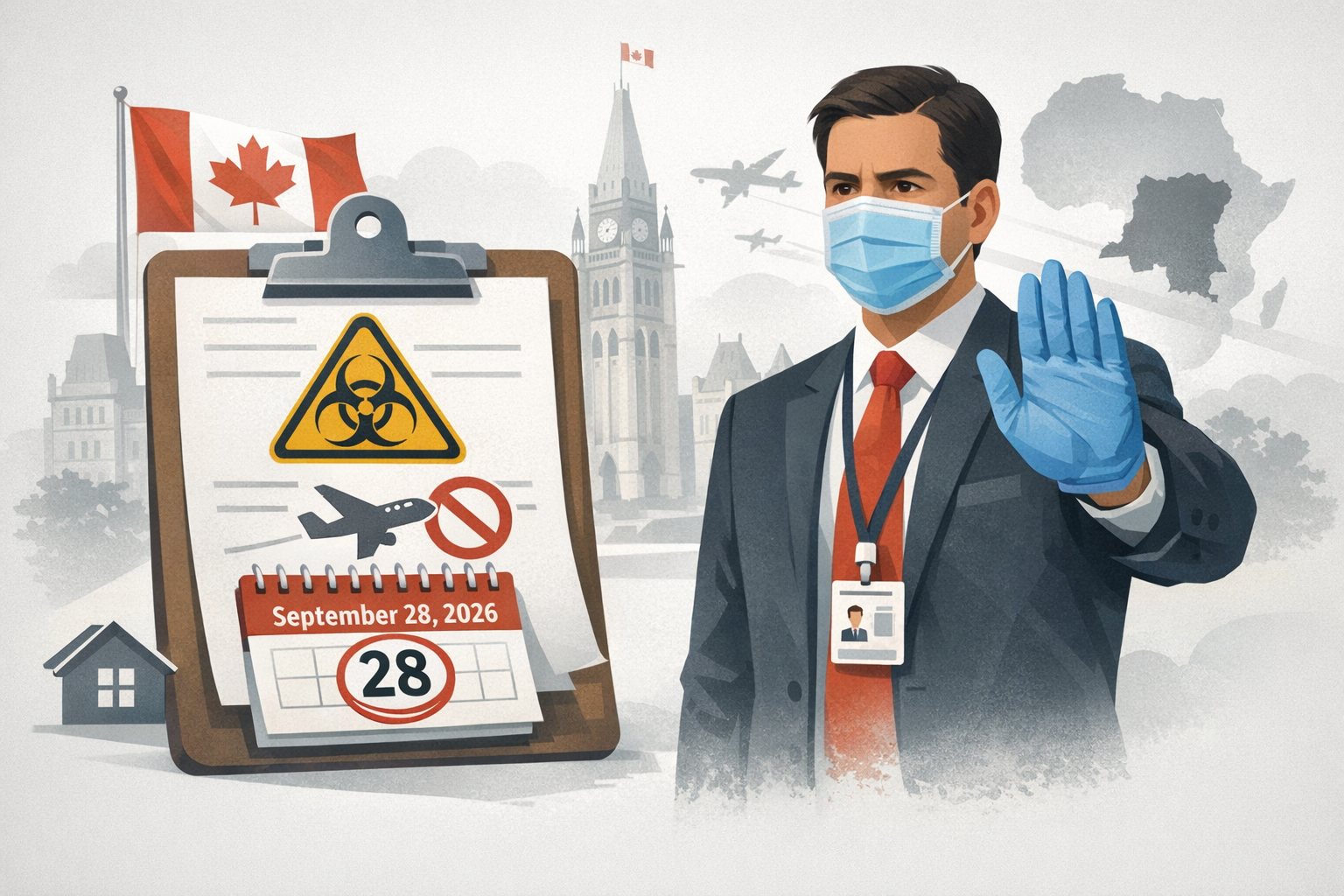
Canada extends Ebola measures
Canada extended Ebola travel measures to Sept. 28, 2026; effective July 20, 2026, foreign nationals who were in the DRC within the previous 21 days cannot board flights to Canada. Affects TRV, Work Permit and Study Permit travellers and may disrupt travel, enrolment and onboarding timelines.
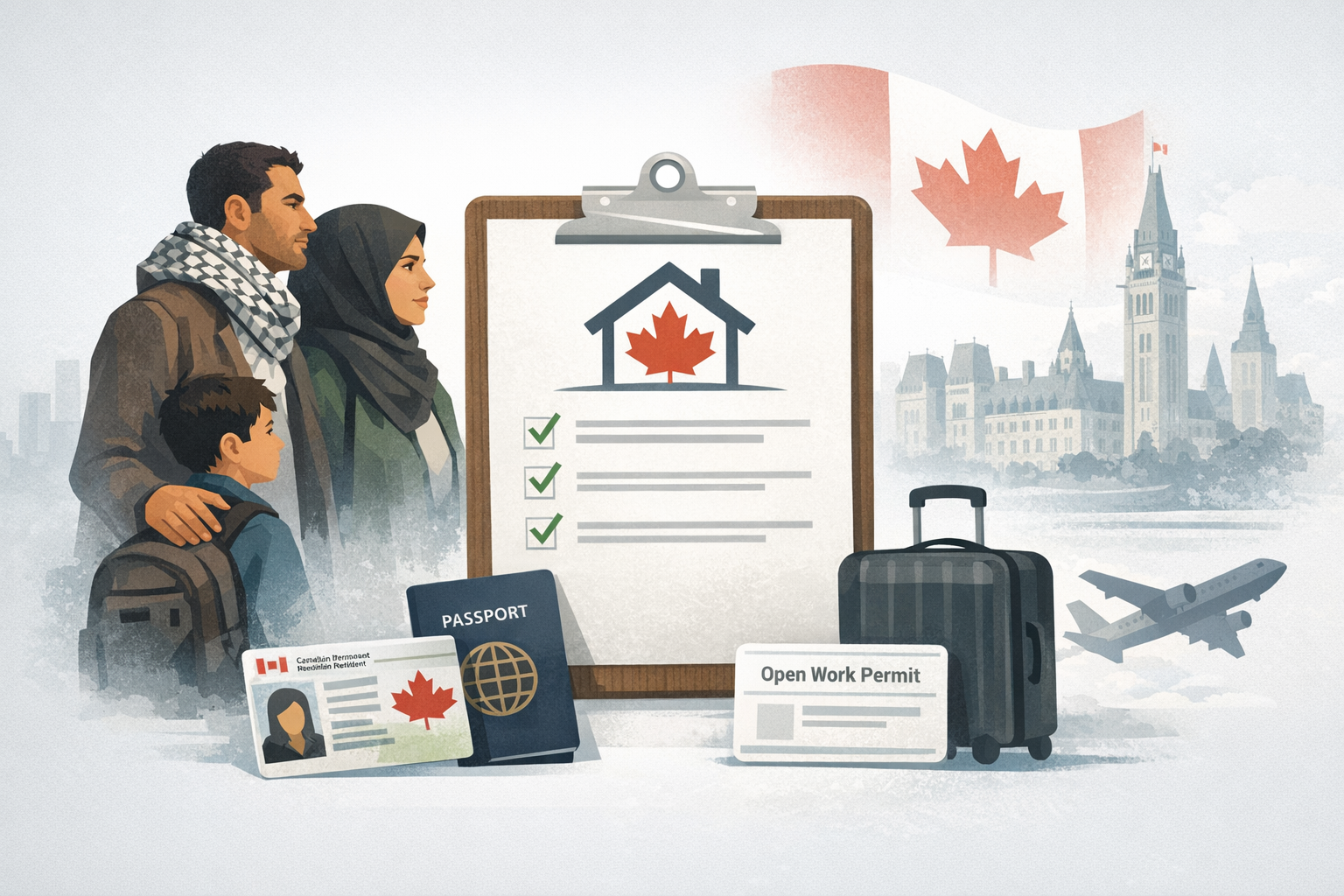
Palestinian Open Work Permits
Canada launches a temporary public policy (Aug 1, 2026–Dec 30, 2027) allowing Palestinians and eligible family members in Canada to apply for or extend open work permits (one-time extension). Policy is in-Canada only, excludes temporary resident permit holders, requires valid temporary status, standard fees apply—use IRCC’s online tool and apply promptly.